
Suspected leak emergency: start with the meter test
Shut off every faucet, the dishwasher, the washing machine and the ice maker. Then look at the water meter, usually in the basement or utility room near where the line enters the house. Many meters have a small triangle or dial that spins when any water at all is moving.
If it turns with the whole house quiet, water is escaping somewhere. EPA's WaterSense program suggests a longer version of the same idea: read the meter, wait two hours with no water use, and read it again. Any change means a probable leak.
Signs of a hidden leak
Most hidden leaks announce themselves long before a ceiling stains. These are the clues we ask about first.
A bill that climbs for no reason
EPA says a family of four using more than 12,000 gallons in a cold winter month may have a serious leak. Compare your bill to the same month last year. Your water bill comes from the Easton Water Division, so they can also tell you how your use compares.
Warm spots, damp odor or mildew
A warm patch on a floor can mean a hot-water line is leaking under a slab. A musty smell in a closet or behind a vanity points to a slow drip inside the wall.
Pressure that drops or hissing you cannot place
A line leaking under pressure often hisses faintly at night when the house is quiet. Lower pressure at fixtures farthest from the meter is another clue.
Is it the toilet? Check before you call
A toilet flapper that does not seat is the most common silent leak in any house. Put a few drops of food coloring in the tank and wait about ten minutes without flushing. If color shows up in the bowl, the flapper or fill valve is leaking, and that is a simple repair covered under toilet repair.
If the toilet is clean and the meter still moves, the loss is somewhere in the supply piping, the water heater connections or the line outside the foundation. That is when a detection visit earns its keep.
How we pinpoint a leak, by method
| Method | What it finds | Works best when |
|---|---|---|
| Meter and pressure test | Confirms a leak exists and whether it is on the supply side | First step on every call |
| Acoustic listening | The sound of water escaping a pressurized pipe | Slab floors, buried lines, quiet surroundings |
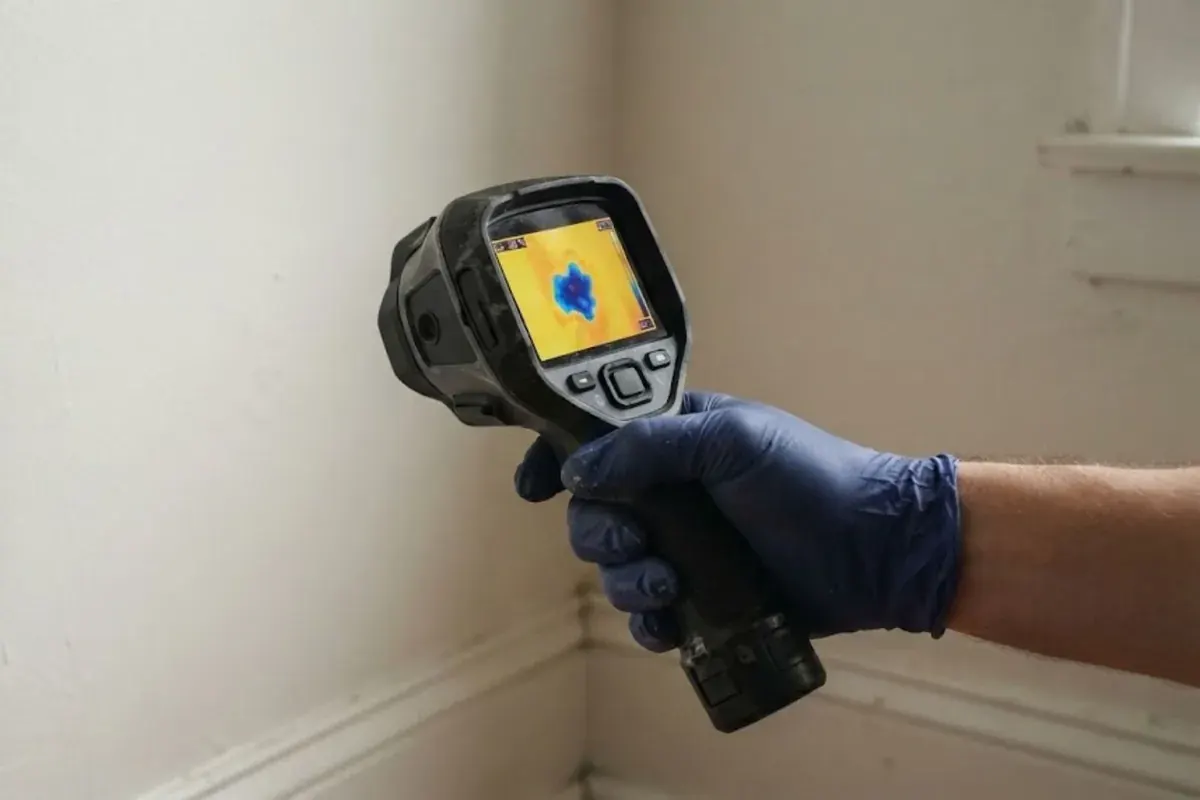
| Thermal imaging | Temperature differences from wet or hot-water-heated areas | Hot lines under floors, wall cavities, ceilings |
| Tracer gas or camera | Small leaks in drain lines or inaccessible runs | Drain or waste leaks that do not show on the meter |
Slab leaks and underground lines
Homes with concrete slabs hide their supply pipes under the floor. When one of those pipes pinholes, water can run for months before it surfaces. Acoustic gear picks up the hiss through the concrete, and a thermal camera shows a warm trail if the leak is on a hot line.
Once the spot is marked, the plumber discusses the options with you: open the slab and patch the pipe, or reroute the line overhead. A line that has failed more than once is worth a conversation about repiping. A leak between the street and the house is a different repair, covered on the water line repair page.
What to do first when you suspect a leak
If water is visible or the meter is racing, move quickly and in this order.
Close the main valve
Turn the main shutoff clockwise until it stops. If water stops entering the house, the problem is inside the valve's downstream piping.
Open the lowest faucet
Draining the system relieves pressure and limits damage while you wait.
Protect what is nearby
Move rugs, boxes and electronics off the floor. Stay away from outlets and panels if water is near them.
Photograph the damage
Take dated photos for your insurer before anything is dried or removed.
Call the 24/7 line
Tell the dispatcher what the meter did and where you see water or stains.
Water bill or meter acting strange at any hour
Call the 24/7 line and describe what the meter is doing. We will help you decide how urgent it is.
Why leaks hide in Easton houses
Older homes around North Easton and South Easton often have galvanized steel or early copper that corrodes from the inside, and a pinhole there can spray into a wall cavity. Any house built on a slab may tuck supply lines beneath the floor, where nobody sees them. Newer homes carry PEX or CPVC with fittings that can weep at a crimp or a glue joint.
Winter adds its own risk. Pipes in exterior walls and unheated crawlspaces freeze and crack during cold snaps, and the damage may only show when the thaw comes. If you were away during a freeze, check the meter on your return even if nothing looks wet.
What affects the cost of leak detection
You get a clear price before work starts. Here is what the plumber weighs when quoting.
What moves the price
Some homeowner policies cover sudden water damage but not the cost of the repair itself, so ask your insurer before the work starts.
☎ Want your real number? Call (508) 389-4045Where the tests come from
The meter test and toilet dye test on this page follow EPA WaterSense guidelines, and the Easton Water Division can answer questions about your meter. Replacing pipe, as opposed to repairing a faucet or valve leak, falls under the permit rules in 248 CMR 3.05.
Leak detection questions from Easton homeowners
Yes. The line is answered around the clock, including nights, weekends and holidays. If water is actively spraying, shut off the main valve first and then call.
Usually the first goal is to find it without opening anything. Acoustic and thermal tools narrow the location to a small area, and the plumber opens only that spot.
Do the meter test above, check the toilets with food coloring, and look at the water heater and any outdoor spigots. If the meter still moves, call and we will start the search.
Ask the Easton Water Division who owns that section before any digging. We can tell you what we see, and the Division can tell you who handles the repair.
Yes. Irrigation lines and outdoor hose bibs are common culprits, especially after winter. We check them as part of the search.